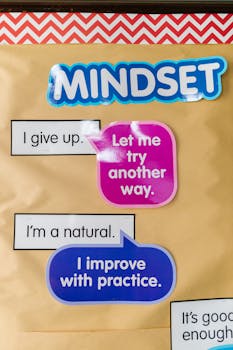
Everyone wants real, measurable change when they try new growth mindset steps, but real progress happens through small, steady choices rather than overnight leaps.
More people are realizing that mindset shapes nearly everything, from career advancement to personal happiness, and the right guidance can make shifts feel achievable and clear.
Ready to practice growth mindset steps each day? This guide delivers actionable techniques, habit-building advice, and realistic examples you can try right now to build a resilient outlook.
Start With Specific Words and Daily Choices
Changing the way you think starts with swapping out certain words and phrases for language that invites possibility and learning. One single sentence can shape your next decision.
Growth mindset steps become easier to follow when your words match your goals. In meetings, for example, replace “I can’t” with “I haven’t mastered this yet.” That shift creates momentum.
Practice Identifying Fixed Mindset Statements
Write down recent moments you felt stuck, discouraged, or embarrassed. Notice if your self-talk sounded final, such as “I’m just not good at this.” Highlight the fixed phrases.
Each time you spot a limiting phrase, pause. Say aloud, “That’s a fixed mindset thought.” Naming them makes it easier to swap them out with something more flexible.
After identifying a fixed phrase, create a new version. For instance, instead of “I’ll never remember,” say, “I need to try a different strategy to remember better.”
Script Growth Mindset Responses for Key Scenarios
Pick recurring challenges—like making mistakes in public or facing criticism. Script growth mindset responses such as, “What can I learn from this?” or “This is a skill I can improve.”
Practice saying these scripts out loud. Notice how your tone and posture change. Practicing the response builds muscle memory for real-life moments.
Create short cue cards with your favorite growth mindset steps. Place them where you’ll see them throughout your day, like your desk or phone case.
| Fixed Phrase | Growth Mindset Swap | Use Case | Next Step |
|---|---|---|---|
| “I can’t do this.” | “I’ll try a new way.” | Facing a new task at work | List one alternate approach |
| “I failed.” | “Mistakes help me learn.” | Receiving negative feedback | Write what you’ll try differently |
| “I’m not good at this.” | “With practice, I’ll get better.” | Trying a new skill | Set a 10-minute practice time |
| “This is too hard.” | “Challenge grows my skills.” | Stuck on a tough project | Break task into smaller pieces |
| “I’ll never get this.” | “Learning takes time.” | Long learning curves | Mark progress points weekly |
Reframe Mistakes Into Meaningful Growth Opportunities
Turning setbacks into useful growth lessons is a powerful step. When you view mistakes through the lens of growth mindset steps, you gain valuable information and move forward with intention.
People with a strong growth mindset will analyze an error and say, “What feedback is this giving me about my process?” Instead of assigning blame, they see data.
Plan Post-Mistake Actions
After something goes wrong, take five minutes to write one thing you learned. Phrase it specifically: “I missed this step because I rushed.” Pinpoint the cause clearly.
Create a next-action sentence. For example, “Tomorrow, I’ll slow down during this critical part.” Writing actionable steps cements the lesson and demonstrates practice.
- Write what you learned – Analyzing the details helps you understand your mistakes and avoid repeating them in the future.
- Share lessons learned with a peer – Discussing your setbacks with someone you trust can clarify the lesson even further and give you helpful feedback.
- Set a small improvement goal – Tackling one specific skill at a time makes progress trackable and keeps your mindset positive.
- Celebrate effort over outcome – Focus on the energies and courage you applied, not just the result. This reinforces the value of persistence through growth mindset steps.
- Ask for new strategies – Seeking outside input can reveal smarter methods you hadn’t considered. Fresh ideas can reduce frustration and accelerate growth.
Over time, these strategies become your new default response, strengthening the feedback loop that helps you persist and adjust.
Develop Reflection Habits for Lasting Change
Set aside a regular time each week to review recent challenges. Use a journal, app, or voice memo—whichever fits your style and helps you sustain growth mindset steps.
Begin each reflection with a prompt: “What was hard? What did I learn? What can I try differently?” Consistency builds self-awareness and reveals your biggest growth patterns.
- Block 10 minutes at the end of Friday – Regular reflection builds a habit of learning by doing, making improvement second nature.
- Use a voice memo after tough meetings – Verbalizing feelings makes the next step less daunting and validates your efforts toward better growth mindset steps.
- Write one sentence summary at bedtime – Creating short, focused reflections avoids overwhelm and lets you track patterns.
- Share your favorite fail with a friend – This normalizes setbacks and encourages risk-taking in everyday life.
- Try a “lessons noticed” page each month – See growth across weeks, not just days, to spot momentum.
Your growth mindset takes root when you treat mistakes as valuable steps on your learning path instead of finish lines or evidence against yourself.
Use Effort-Based Praise and Encouragement Consistently
Switching to effort-based praise strengthens motivation and focus. Saying “I admire how you stuck with it” encourages persistence through daily growth mindset steps, no matter the outcome.
Link praise to specific actions. Instead of personal labels, comment on the process: “You spent extra time problem-solving, and that paid off.” This builds pride in hard work, not fixed ability.
Give Effective Praise in Real Time
Notice moments of struggle or incremental progress as they happen. For example, during a team project, say, “It was tough, but your new strategy made a difference!”
Share specific, actionable praise instantly. Tie feedback to what you observed, rather than generalities: “I saw you rewrite that report twice for clarity. That’s growth mindset steps in action.”
When you acknowledge the process, others feel seen for their efforts. This builds culture where setbacks aren’t stigmatized but used as fuel.
Encourage Others to Self-Acknowledge Growth
Ask your team or family to name one action they’re proud of each week. Prompts like, “What felt difficult but got easier?” help link effort and progress.
Support reflection by modeling the habit yourself: “I challenged myself with an extra run today. I’m glad I did, even though it wasn’t perfect.”
Consistently practicing these growth mindset steps with others sets a collaborative tone and reduces fear of mistakes for everyone involved.
Break Big Goals Into Manageable, Weekly Sprints
Dividing ambitious goals into weekly sprints reduces overwhelm and keeps growth mindset steps actionable every week. Each week you have measurable progress and a chance to celebrate success.
This sprint approach mimics athletic training, where steady increments yield stronger results and boost self-belief. You experience regular wins instead of impossible standards.
Visualize Progress With Small Wins
Draw a progress chart or use a habit tracking app. Color successful days or mark off mini-tasks. Celebrate completing even small steps, since each is proof of commitment.
Acknowledge these markers aloud: “This is my third week in a row keeping my reading goal.” Say it to someone else, too, to reinforce your growth mindset steps.
Treat each small win as both evidence and motivation. Momentum multiplies and you begin to pursue bigger challenges with more confidence.
Create Stepwise Checklists for Each Sprint
Write out the steps of your weekly focus, like “draft outline, review notes, write introduction, ask for feedback.” Post this list somewhere visible for daily accountability.
Physically check off each micro-step. A checklist clarifies progress and adapts long-term goals into daily, bite-sized growth mindset steps.
Review your checklist Sunday night. Decide what went well and set next week’s first step before Monday starts, never losing momentum.
Practice Curiosity and Ask Better Questions
Fueling your curiosity drives growth mindset steps across learning and habit change. The questions you ask decide what you discover and where you’ll improve next.
Approach challenges with an investigator mindset: replace judgment with questions. Say to yourself, “What’s another perspective? What don’t I know yet?” This curiosity sparks learning.
Adopt a Beginner’s Mind Daily
Pretend you’re new to each recurring task. Even if you’re experienced, imagine you know nothing. Ask, “What can I uncover if I ignore assumptions?”
Try a new route to work or a new recipe. Newness strengthens your ability to adapt, a key ingredient in any set of growth mindset steps you practice regularly.
Notice patterns in your curiosity. Record your best daily questions and responses to reinforce this open, growth-centered approach.
Model Learning Aloud
Solve a problem you don’t fully understand at work or home. Narrate your approach aloud: “I’m not sure about this, so I’ll look up a tutorial first.”
Invite feedback by asking, “What might you try next?” in meetings or family discussions. Curiosity paired with collaboration multiplies results.
Post one ‘Aha!’ moment a week for peers to see, proving that living growth mindset steps is a group process.
Regroup After Setbacks Using Resilience Rituals
Everyone encounters setbacks, but using resilience rituals makes it easier to bounce back—and keeps you grounded in growth mindset steps, even when progress feels slow.
Set a predictable routine for regrouping after tough spots. For example: a short walk, a mindful breathing session, or calling a trusted friend to share your learning.
Try Physical Anchors to Reset
Keep a stress ball, a favorite mug, or a sticky note with encouraging words on your desk. Using these anchors helps you pause, reset, and restart your growth mindset steps confidently.
Each time you hold or see your anchor, breathe deeply for three cycles. Use this break to decide your next single, constructive action—no pressure to fix everything at once.
Anchoring your routine with physical cues trains your brain to associate resilience with consistent, positive actions, not frustration or avoidance.
Build a Personalized Recovery Checklist
Write five steps for regrouping after setbacks, such as: pause, breathe, reflect, outline a small next move, share your plan. Post your list where you’ll see it.
Use the checklist right after a setback or mistake. Checking off each action keeps you focused and moving, reinforcing your commitment to ongoing growth mindset steps.
Update your checklist as you find new tools or approaches that work better for you. Flexibility is a core strength in every growth journey.
Stay Accountable With a Growth Partner or Community
Regular, honest support gives you momentum and accountability on your growth mindset steps journey. Connecting with a growth partner multiplies your progress and motivation.
Choose someone who values improvement and will celebrate effort-based wins with you. Set up weekly check-ins or text reminders to discuss challenges and growth.
Share Wins and Lessons Weekly
Each week, trade stories with your partner: share a recent mistake, what you learned, and what you’ll try differently. This deepens insights and builds new habits together.
Put growth mindset steps into every check-in by asking, “What did you try this week that felt new?” Cheer on each small win—no achievement too minor to celebrate.
End each call or chat by setting a micro-goal for the next week. Support from another person makes these new habits more durable.
Troubleshoot Together When You Hit Walls
If you hit a plateau or feel frustrated, use your growth partner as a sounding board. Talk through what feels stuck and invite their outside perspective.
Ask specifically, “How have you handled similar situations?” or “What would you try first if you were me?” Brainstorming together expands your toolkit and boosts your motivation.
Keep your growth mindset steps visible by logging them in a shared doc or texting progress photos. This public record deepens commitment and increases your personal accountability.
Every Step Builds a Stronger Growth Mindset Foundation
Building a resilient mindset is about repeating small, intentional actions daily. Each growth mindset step creates evidence you can learn, adapt, and improve over time—no single leap necessary.
Your thoughts, words, and responses form the foundation for all future growth. By practicing these steps consistently, you transform effort into reliable momentum—even when comfort zones feel alluring.
Return to your chosen growth mindset steps whenever challenges arise. Learning is cumulative, and every choice reinforces the path to better skills and deeper self-confidence in every area of your life.