Sometimes being productive feels out of reach, but small changes with simple productivity systems can make a noticeable difference starting today—no complex setup required.
Balancing work and life gets easier once reliable systems replace guesswork. Simple productivity systems matter because the right structure helps anyone create dependable results one step at a time.
This guide walks you through practical approaches and strategies that let you use simple productivity systems right away, transforming everyday tasks into meaningful progress.
Use Visual Task Boards to Clear Your Mind Fast
Visualizing your tasks removes mental clutter and lets you see priorities at a glance. Setting up a basic task board clarifies what to tackle first.
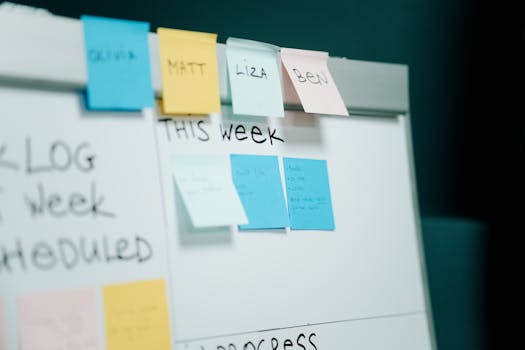
Simple productivity systems like task boards can take many forms—from sticky notes on the wall to digital boards—offering an immediate sense of control and direction.
Turning Ideas into Actionable Tasks
Rather than keeping ideas swirling in your mind, write each actionable task on a sticky note. This moves thoughts out of your head and onto a visible workspace.
For instance, if you’re planning a kitchen clean-up, use a separate sticky note for each step: “Wipe counters,” “Empty fridge,” or “Sweep floor.”
Once you finish a task, move its note to a Done column. Repeat daily for momentum and confidence from seeing progress at a glance.
Reducing Overwhelm with Columns
Organizing tasks by columns—such as To Do, Doing, and Done—breaks large goals into smaller, bite-sized actions. This visual flow simplifies choices each day.
If your to-do list feels overwhelming, try limiting the Doing column to three tasks at once. This narrows your focus and prevents task overload.
Stick finished notes in the Done column before bedtime. This gives you a visible reminder of accomplishment, making starting the next day easier.
| System | Best For | Setup Time | Next Step |
|---|---|---|---|
| Physical Task Board | Visual thinkers | 5 minutes | Buy sticky notes, prep space |
| Digital Board | Remote work | 10 minutes | Choose a free tool, add categories |
| Whiteboard & Markers | Family or team use | 5 minutes | Mount in common area, draw columns |
| Weekly Paper Planner | Traditional list-lovers | 2 minutes | Pick one spread per week, list goals |
| Mobile App Checklist | On-the-go | 7 minutes | Install app, organize daily tasks |
Batch Similar Tasks for Fast, Stress-Free Progress
Grouping similar activities into batches lets you finish more in less time and reduces mental fatigue. Try this simple productivity system for any routine chore.
Schedule errands together, write emails in a set block, or process paperwork all at once. Batching turns repetitive tasks into efficient, focused sprints instead of constant interruptions.
Cut Distraction with a Task-Batching Breakthrough
Reserve fifteen minutes midday for responding to messages, instead of answering as they arrive. This keeps you on track and your attention undivided for the rest of the hour.
People using simple productivity systems hear: “I’ll answer messages after lunch” or “All bills paid Thursday evening.” Everyone knows what’s next, and you avoid context-switching.
- Set blocks: Group emails and reply between 2–2:30pm to reduce constant inbox checking.
- Prepare: Gather all paperwork every Sunday, then process and file everything in a dedicated batch.
- Plan: Batch meal prep, chopping vegetables and cooking grains for the week on one evening.
- Communicate: Tell your team, “I’ll review updates at 4pm,” so they anticipate feedback and you can focus.
- Protect energy: Limit chore batch to 30 minutes after dinner, keeping evenings free for downtime or hobbies.
Batched routines save time, but also offer closure. Marking off a batch feels far more rewarding than crossing off dozens of single errands scattered through the week.
Reclaim Time with ‘Theme Days’
For deeper focus, assign entire days to broad themes. Mondays could mean meetings, Wednesdays for house projects, and Fridays become planning days.
Theme days remove uncertainty by creating predictable space for recurring work—with each block repeated weekly. This reduces mental load over time.
- Decide: Pick one focus per day, like “Admin Mondays” to sort paperwork or “Workout Wednesday” for fitness and health routines.
- Organize: Schedule deep work on Thursday mornings only, knowing meetings will never interrupt this block.
- Inform: Tell family, “Saturday is family chore day; Sunday is relaxation.”
- Track: Use a visible calendar so everyone sees the weekly flow and can contribute without confusion.
- Evaluate: At week’s end, check which theme blocks worked and adjust as needed for flexibility.
This simple productivity system turns routines into habits, putting key work on autopilot while freeing bandwidth for surprises, personal growth, or downtime.
Time Blocking Makes Your Schedule Predictable and Actionable
Time blocking carves out clear windows for focused work and rest, letting you protect your priorities in advance. This method adapts easily to personal or professional routines.
Simple productivity systems like time blocking help prevent task overlap. Assign firm times to each block—don’t just rely on a vague to-do list.
Map Your Day with Hourly Blocks
Take your daily to-do list and assign each action a start and finish time. Enter these in a paper planner or digital calendar for clarity.
If you know “Prepare report: 10am–11am,” you’ll avoid drifting into unrelated tasks. Start the block with a timer, and stop when the window closes.
When tasks take longer, note the actual end time. Adjust upcoming blocks accordingly and leave flexibility around major priorities to handle surprises without stress.
Protecting Boundaries: Build Rest Into Your Schedule
Include 15-minute rest blocks between work sessions. Use these windows only for breaks: step outside, stretch, hydrate, or enjoy a quick snack.
Simple productivity systems that use time blocks for both work and rest lead to better energy. Without built-in breaks, attention will fade by midday.
Over time, the habit of blocking both focus and rest ensures steady performance and prevents burnout—day after day, week after week.
Micro-Habits Drive Consistent Growth Every Day
Building progress in small steps adds up to lasting change. Micro-habits root new behaviors into daily life, making consistency easier to achieve and maintain.
Instead of chasing perfect routines, pick one action so small you can’t fail, repeat daily, and let real momentum do the heavy lifting.
Create a Success Trigger Every Morning
Start by linking your new micro-habit to an existing routine—like brushing your teeth or making coffee. For example: “After making coffee, write one bullet point in my planner.”
This pairing works because the cue is already established and reliable. Simple productivity systems often build on current habits, using triggers as natural reminders.
When this sequence becomes automatic, increase complexity or frequency. Only move on once the micro-habit no longer needs effort to start each day.
Celebrate Wins to Reinforce Motivation
Each time you finish your micro-habit, use a simple celebration: a fist pump, happy dance, or saying “Done!” out loud. Physical cues make success memorable.
Researchers note that pleasure increases the chance of repeating a behavior. Simple productivity systems that build celebration into routines create self-sustaining cycles of effort and reward.
Add a small reward, like sipping your favorite tea, for sticking with your micro-habit a full week. This keeps motivation strong and progress visible.
Systems for Prioritizing the Right Tasks Always
Knowing which tasks matter guides your effort toward real results. Prioritization systems help you avoid wasted energy and keep you working on what actually advances your goals.
A classic example is the Eisenhower Matrix, which splits tasks by urgency and importance. Using this tool keeps your focus directed where it’s most valuable.
Prioritization in Practice: Daily Decision Scripts
Before acting, ask: “Is this urgent or important—or both—according to my goals?” Write high-value actions in the top-left quadrant of a simple matrix or table.
Here’s what you might say as you work: “Finish the report due today (urgent/important) before checking social media (not urgent).” Place less critical tasks into delegate or delete bins.
Simple productivity systems favor visible cues. Use colored pens or sticky notes for each category, helping you quickly decide what needs your attention right now.
Switching from Brainstorming to Action Mode
Keep brainstorming separate from executing. Reserve five minutes for dumping ideas into “Someday.” Move only one or two critical actions into today’s active block.
This distinction prevents distraction. If you see “Draft book outline” in your active box, it’s time to write, not collect more resources.
Over time, your brain links the simple productivity systems structure to automatic workflow, reducing wasted time deciding what’s next.
Accountability Partners: Increase Follow-Through Rapidly
Adding accountability to your system encourages steady action. Whether through casual check-ins or formal partnerships, being observed can dramatically improve consistency.
Simple productivity systems that include mutual support keep you moving even on difficult days through gentle encouragement and a shared sense of responsibility.
Daily Stand-Ups: Share Your Priority
Each morning, message a partner: “Today’s top task: Finish budget draft by noon.” The check-in happens before work starts—no extra meetings required.
At day’s end, update your partner on progress, even if you didn’t complete everything. Honesty and frequency boost long-term momentum better than waiting for perfect effort.
Choose someone with similar goals or schedules. Short, direct communications (“Sent two emails” or “Finished workout”) prevent the system from becoming a distraction.
Public Commitment and Social Rewards
Post your week’s key task in a trusted group chat or on a shared calendar. Seeing peer support (a thumbs-up emoji or “Good luck!” reply) acts as added motivation.
Celebrating successes and failures together strengthens your routine. “Missed today, but I’ll try again tomorrow” keeps things light, preventing guilt from derailing your new system.
Simple productivity systems rely on community when personal willpower flags. Support others in return for a strong, ongoing momentum loop.
Takeaways for Building Reliable Progress with Simple Productivity Systems
Using simple productivity systems like batching, visual boards, or time blocking builds small wins into each day, making impactful progress feel totally doable.
By rooting routines in visible structure and mutual support, anyone can steer their energy toward real priorities. These systems are flexible enough to fit every lifestyle.
Experiment with these examples until you find the right mix. Simple productivity systems work best when tailored to you, powering steady growth with minimal fuss—one day at a time.